Note: This post was published in March 2023.
“I think you learn more if you’re laughing at the same time.”
– Mary Ann ShafferIt has always been a matter of debate whether education can truly go online. One thing is definitely clear in the professional learning space: You may not always have access to the best resources in person.
If you are not online, you are missing out on a big network of people who are seeking the same things as you — professional growth and fun along the way!
At NextLeap, we are creating cohort-based courses that embody the spirit of peer-based learning. What opportunity did we see?
- When the world changes, you need to change too: Technology is changing at a fast pace every year. The processes and skills that worked a decade ago may no longer be required. As we can see from the example of developments in the AI domain, professionals need to actively learn new things to augment their work style and output.
- We learn best when we learn from each other: A key ingredient missing from most online learning resources was human-to-human interaction and learning. Creating a supportive community of peers, mentors, and industry experts ensures that people learn from each other’s experiences and have someone who can pick them up when they are stuck.
- Take control of your growth: Each individual’s learning needs are different because all of us have different strengths and weaknesses. Rather than rely on a one-size-fits-all plan, professionals need to take charge of their own development and seek structured learning paths that let them achieve their goals.
Keeping these three things in mind, we have run several kinds of cohort-based courses that focus on application-based learning and outcomes. Right now, we are focusing on people who want to transition to a career in product, design, or software development, helping them take the first step towards a fulfilling work life.
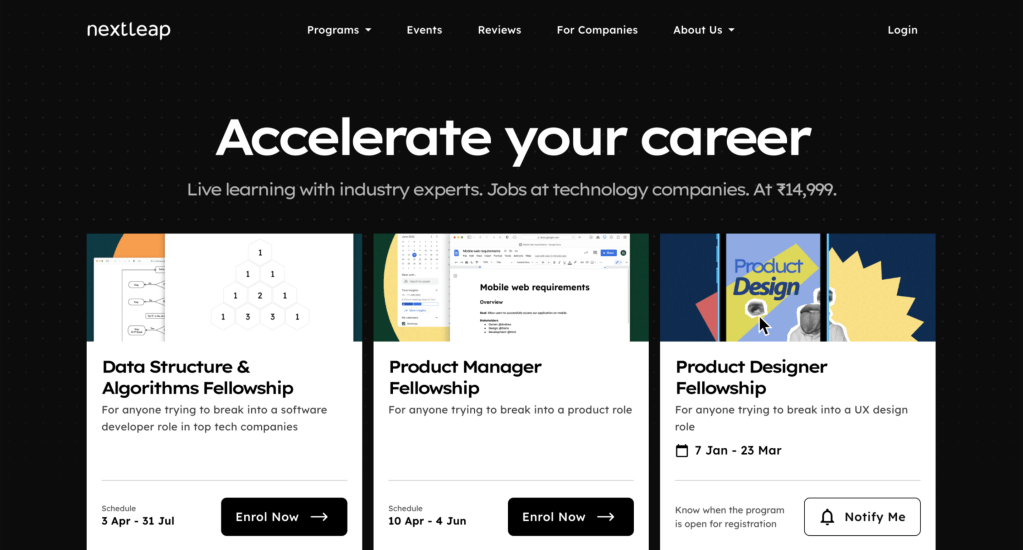
Hands-on pedagogy and peer-learning are the core of our products and platforms at NextLeap. We are constantly evolving our products based on user feedback.
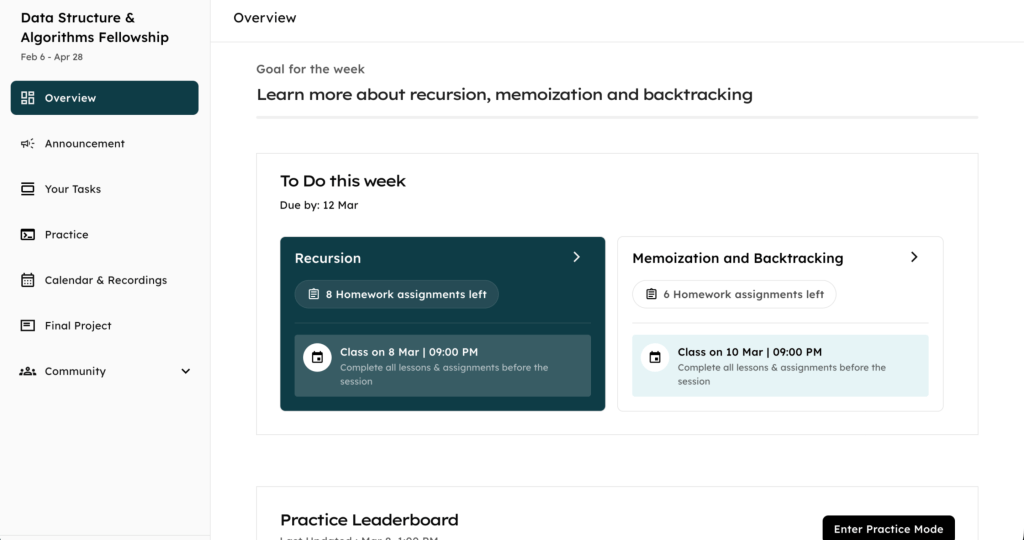
The learning management system (LMS)
The LMS is designed to become the single-source of truth for all resources and activities. It is complemented by our community platform, Discord, for peer-interaction.
- Motivation systems and rewards: Learners get rewards for completing activities. Because the courses run at a specific page, it is important for learners to put the concepts to use in the same week that they are taught those concepts. Rewards ensure that they can stay inspired.
- Seamless module-wise structure: All reading materials, quizzes, assignments, and projects are divided into smaller chunks as per the topic. Further, every topic has weekly tasks and goals. The learner never has to wonder “where to begin” and can simply follow the structure on the LMS.
- Practice: For our software developer courses, we have a separate “practice” mode that lets our learners practice coding problems from a repository of easy-medium-hard questions on all topics. Learners who do well end up on the leaderboard, encouraging them through positive reinforcement and inspiring others to pick up the pace.
- Course schedule & operations: Learners can find the entire schedule, past recordings, their peer group details, their mentor’s details, announcements, and deadlines directly on the LMS.
- Interview preparation: Many of our learners are looking to transition into a role. We have resources and sessions designed to help them prepare well. Learners can coordinate for mock interview sessions directly from the LMS.
- Integrated with a Portfolio: A portfolio is an important component of an effective job search. To help learners stay on track with building a portfolio, we use the project and details they have already shared with us to create a portfolio with a public URL that they can share with the world!
Video tool for learning: “Spot”
Zoom is a household name by now. Every person who does anything online has used it in the past two years as the world went “remote” during the pandemic.
However, Zoom is also a commercial tool. It is designed for a large number of use-cases and comes packed with a thousand features for every scenario. While this makes Zoom quite versatile, it also means that Zoom is not customised for “learning”.
When you learn online, you sit in front of a screen and interact with peers, instructors, learning materials, and activities through the screen. Human-computer interaction plays a key role here. Learning tools need to solve for the following:
- Learner experience: Learners need to be able to seamlessly interact with instructors and fellow learners. They should be able to do activities with their peer group in real time. The “kind of activities that learners do should also help them. A well-designed “tool” would simply vanish into the background and let learners perform these actions as intuitively as they can in an online mode of interaction.
- Instructor experience: Instructors need to perform a variety of tasks during the session. Every session has a certain “flow” and operational tasks that need to be performed. The tool can let them facilitate without needing an operations person in the call. Instructors also need to know how the learners are engaging in real-time, something that they intuitively know in offline mode because they can see expressions, reactions, and mood prevalent in the “room”. For online learning, the same information has to come in through other forms of data and the tool can enable that for instructors.
- Course operations and design: The learning experience design team needs to set up sessions and meetings, facilitate certain parts of the meetings, and analyse data on learner engagement, performance, interactivity with instructors, and ratings. A tool should be able to help them use this data to their advantage and incrementally improve the live sessions.
To address these three key needs, we are building an internal video tool named “Spot”. It is currently in an early beta version and released for a few of our live sessions.
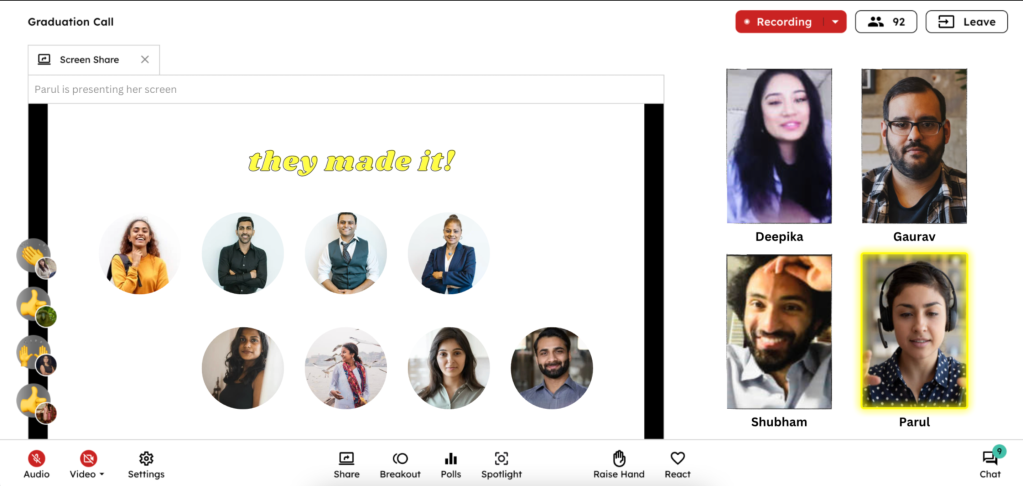
A prototype of Spot’s host view.
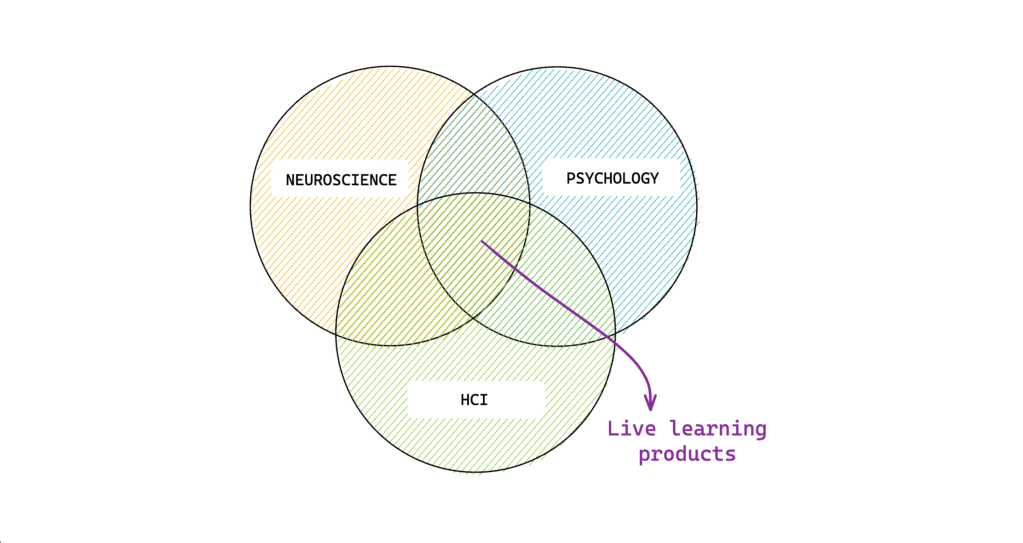
Building a platform for live learning involves a mix of neuroscience, psychology, and human-computer interaction (HCI) design. While complex, the process is incredibly rewarding when you see users crush their goals!
Here is an awesome thread by Wes Kao on how to engage your audience better, even when you’re doing it online:
 Krutika Kalkal